Work Outfits
We know that nailing down the right office outfits isn’t always easy (especially if you work in a professional or business casual environment).
The answer is easy outfit formulas. Using a cohesive color story, start with a few key pieces (pants, sweaters and shirts) and mix and match to create a variety of different outfits that can take you through a work week. Find more men’s capsule wardrobe and women’s capsule wardrobe inspiration to see just how far a pared back closet can go.
Browse Work Outfits
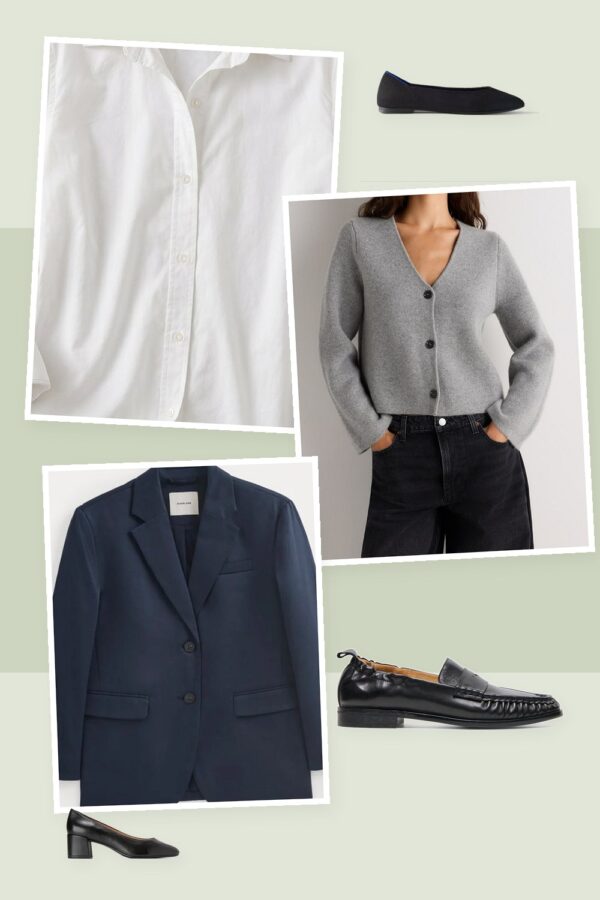
Make Monday Morning Boring
The best work wardrobe is a dull one, at least in the sense that you should barely need to think about it. When everything goes with everything else, getting dressed takes a few minutes and you can spend your attention elsewhere. That idea connects all five guides in this section, whether your office is formal, casual or somewhere in between.
What the Word Professional Means Where You Work
Dress codes vary enormously, and the most useful reference is the person one level above you. Look at what they wear on an ordinary day and on a day with an important meeting. Those two outfits show you the range you should be working within.
- Formal offices: tailored jackets, trousers and closed shoes are the baseline.
- Business casual: an unstructured blazer, a knit and good chinos will cover most days.
- Casual offices: dark jeans and a clean shirt or fine sweater can be perfectly appropriate, as long as everything fits well and looks cared for.
The Guide for Women
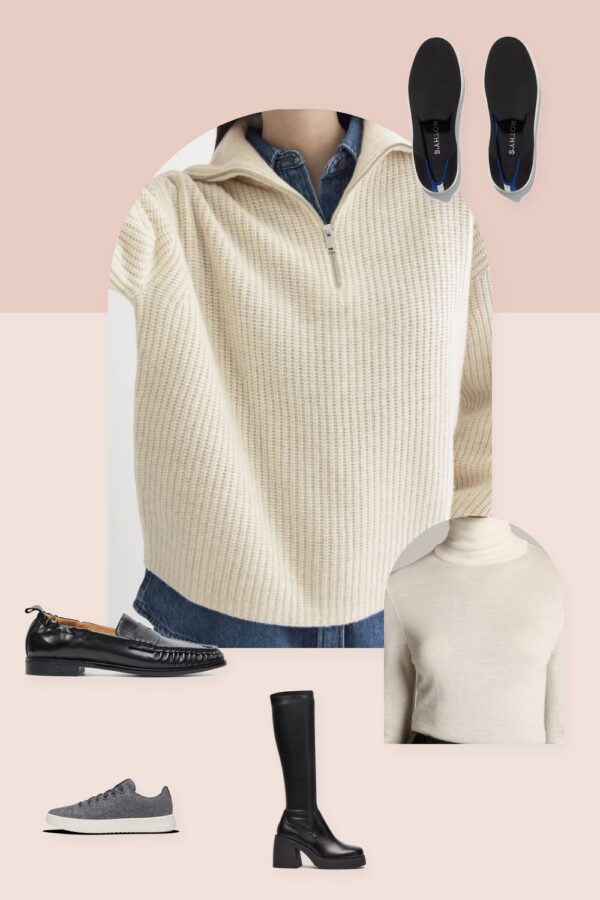
Work Outfits for Women sticks to navy, black, camel, ivory and grey, with a port colored skirt and a soft sage knit for a splash of color. The list contains two blazers, a trench, three trousers, two skirts and two dresses. A variety of shirts and knits wear well underneath them. Footwear ranges from flat loafers for a long commute to a three inch block heel for days when you have a big meeting on the calendar.
Each item in that guide notes what else it goes with. That turns a list of clothes into something more useful: a set of combinations that can last for weeks. Choosing a few favorites is enough to get you started.
The Guide for Men
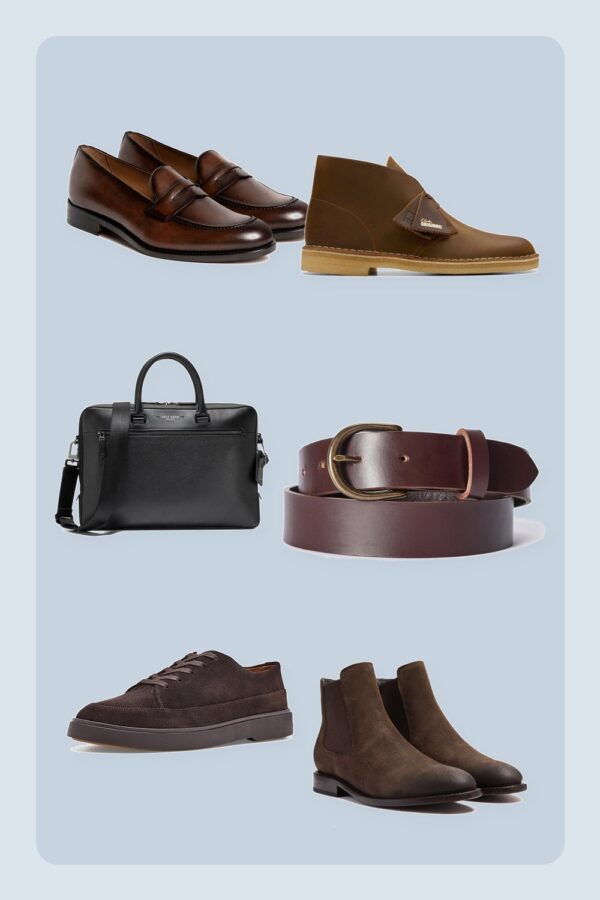
Business Casual for Men lays out 22 key pieces. It starts with pants in khaki, navy, olive and charcoal and moves to shirts in white and light blue. Soft knits, an unstructured blazer and brown leather shoes follow. It also makes room for a belt that matches and a bag that can hold a laptop. The sections are named for how they get used, like Knits for Cold Offices and Jackets Without the Suit.
Cold offices are a real consideration, and a quarter zip or a cardigan can solve the problem without looking like you gave up. The guide also includes a fair number of shoe options, from penny loafers to derbies, because they change how formal the rest of an outfit reads.
Using a Capsule at Work
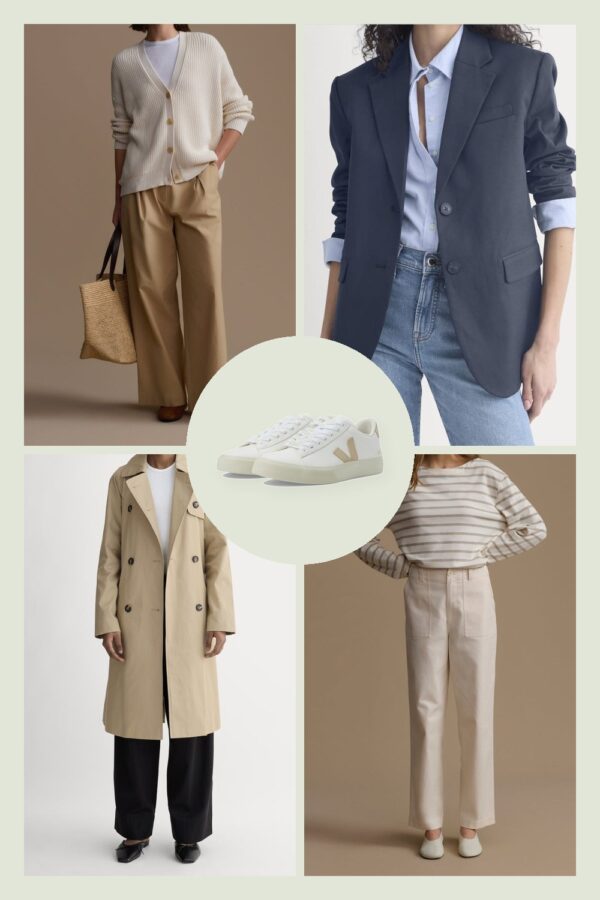
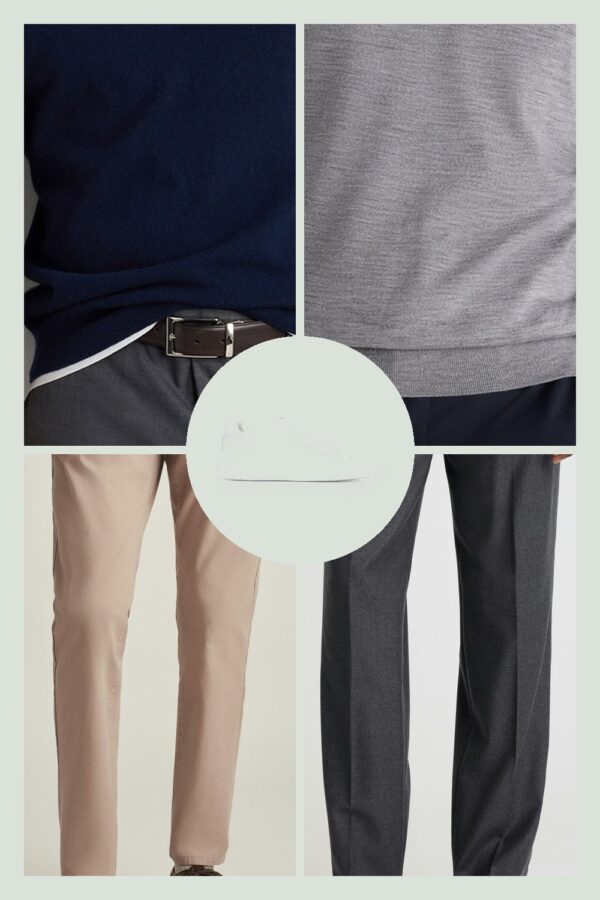
Two of our capsule guides have strong office sections. The Capsule Wardrobe for Women includes The Monday Meeting, The Client Lunch and The Presentation Day, built from just 15 pieces. The Men’s Capsule Wardrobe offers its own Monday Meeting, along with a Casual Friday and The Client Lunch. Because the same items keep returning, you can look different across a week while buying very little.
The Bag Question
A work bag has to hold a lot and still look like it belongs in a meeting. Black Tote Bag Outfits centers on one structured leather tote and shows how it works with seven outfits, including a taupe blazer look for Monday at the office, a waxed jacket for a rainy commute and a casual Friday in a Breton stripe. A single good bag in a neutral color means one less thing to change from day to day.
Planning Your Week in Five Minutes
On Sunday evening, take a look at your calendar and decide which day needs the most from you. Assign your strongest outfit to that day and build the others around what is left. A simple approach looks something like this.
- Monday: your most reliable combination, since it sets the tone for the week.
- Midweek: the outfit with a jacket, in case a meeting gets added.
- Thursday: something with a little more color or texture, to keep things interesting.
- Friday: the most relaxed version your office will allow.
Small Things People Notice
At work, condition counts for more than price. Shoes that have been cleaned, shirts that have been pressed and sweaters without pilling will make a modest wardrobe look expensive. It also helps to keep a spare layer at your desk, since office temperatures rarely seem to agree with anybody.
When Your Job Changes
A new role is a good time to look at what you wear, but not to replace all of it. Spend your first few weeks observing, keep to your most neutral pieces and buy one or two items only once you understand what people around you actually wear. It is far easier to add a piece than to return a closet.
Commuting Changes the Outfit
How you get to work affects what you can wear when you arrive. If you walk or take the train, comfortable shoes matter more than they would if you drive. Some people keep a pair of dress shoes at the office and commute in sneakers or boots, which is a sensible solution when the weather is bad. Our guide for women includes flat loafers specifically for long commutes, and a rainy commute appears among the looks in both the tote guide and the capsule guide.
Video Calls and Hybrid Weeks
If you split your time between home and an office, you can probably reduce the size of your work wardrobe without anybody noticing. Knits and collared shirts look fine on camera, and simple solid colors tend to show up better than fine stripes. Keep your strongest full outfits for in office days, and let the same top do double duty at home with something more comfortable below the desk.
If your office runs cold or warm, notice that early and plan around it. A light cardigan left at your desk or a breathable shirt on warm days can make the whole workday more comfortable, and comfort is easy to underrate when you are buying clothes for a job.
Each guide here shows full outfits and links to every piece, so you can copy a complete look or simply borrow the idea.